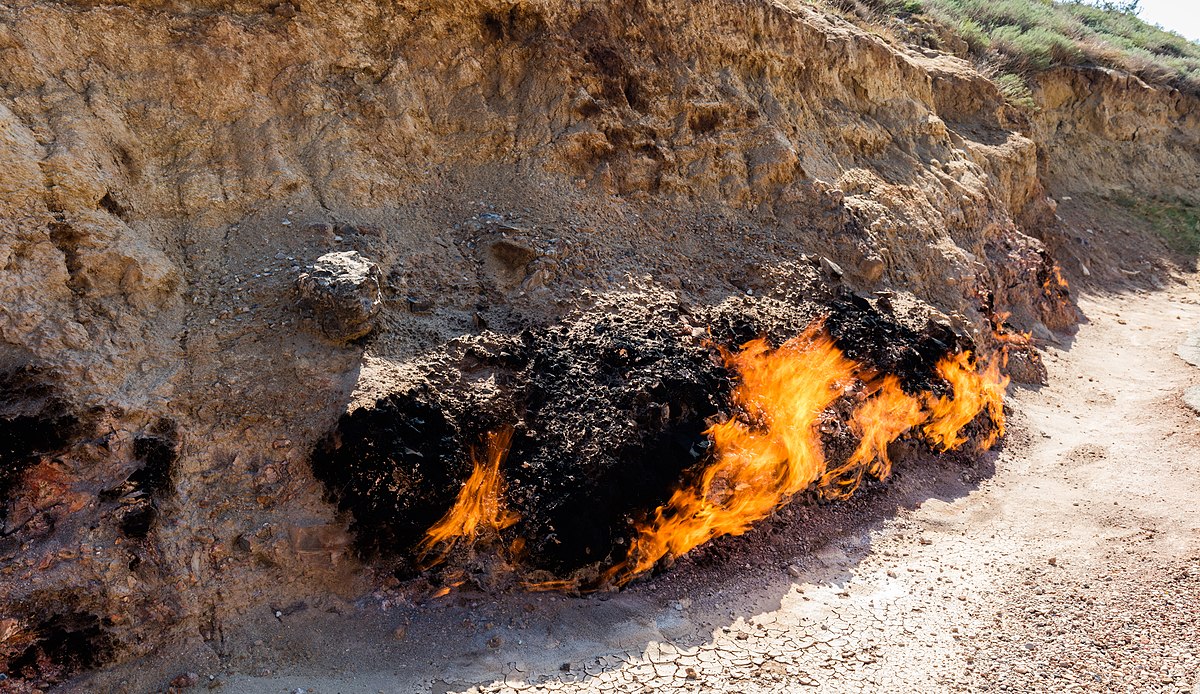
Yanar Dag
Yanar Dag, also known as the “Burning Mountain,” is a testament to the country’s rich geological heritage and deep connection to fire. This remarkable site on the Absheron Peninsula features a continuous natural fire that blazes along a hillside. Fueled by natural gas seeping from the ground, the flames have been burning uninterrupted for decades, possibly centuries. The spectacle of Yanar Dag is particularly mesmerizing at night when the dancing flames illuminate the surrounding landscape, creating an otherworldly atmosphere that leaves visitors in awe.
The origins of Yanar Dag are shrouded in mystery and legend. Local folklore suggests that a shepherd accidentally ignited the fire in the 1950s. However, historical records indicate the area has been known for its flammable gas seeps for much longer. The 13th-century Venetian explorer Marco Polo mentioned the “eternal fires” of the Absheron Peninsula in his travel accounts, hinting at the long-standing nature of this phenomenon.
The scientific explanation for Yanar Dag’s perpetual blaze lies in the region’s geology. Azerbaijan sits atop vast reserves of natural gas and oil, which sometimes find their way to the surface through fissures in the earth. At Yanar Dag, this escaping gas ignites upon contact with air, resulting in the continuous fire that has made the site famous.
Visitors to Yanar Dag can experience the heat and intensity of the flames up close. A viewing platform stretching about 10 meters along the base of the hill allows tourists to observe the fire safely. The flames reach up to 3 meters, creating a dramatic display that is particularly impressive during cooler evenings or in the darkness of night.
Beyond its geological significance, Yanar Dag is of cultural importance to the people of Azerbaijan. Fire has long been a symbol of purification and renewal in Azerbaijani culture, playing a central role in many traditions and beliefs. The country is often called the “Land of Fire,” a moniker that owes much to natural phenomena like Yanar Dag.
For those interested in delving deeper into the scientific and cultural aspects of Yanar Dag, a small museum at the site offers informative exhibits. These displays provide context about the geological processes behind the eternal flames and explore the historical significance of fire in Azerbaijani culture.
Yanar Dag’s location, approximately 25 kilometers northeast of Baku, makes it an easily accessible day trip for tourists visiting the capital. The site has been developed to accommodate visitors, featuring a car park, a café, and souvenir shops. Despite these modern amenities, efforts have been made to preserve the area’s natural beauty and integrity.
Photography enthusiasts will find Yanar Dag particularly appealing. The flames’ interplay of light and shadow against the barren landscape offers unique opportunities to capture stunning images, especially during the golden hours of sunrise and sunset.
Environmentally conscious travelers may wonder about the ecological impact of the continuously burning natural gas. It’s important to note that Yanar Dag is a natural phenomenon, and its flames are not the result of human activity or industrial processes. Nevertheless, the site serves as a powerful reminder of Azerbaijan’s complex relationship with energy resources and the need for sustainable practices in the future.
Visitors to Yanar Dag often combine their trips to nearby attractions on the Absheron Peninsula. The area is home to several other interesting sites, including ancient temples, mud volcanoes, and historical landmarks that offer a comprehensive glimpse into Azerbaijan’s rich cultural and natural heritage.
As you stand before the flickering flames of Yanar Dag, it’s easy to understand why fire has captured the human imagination for millennia. This natural wonder serves as a unique tourist attraction and a living link to Azerbaijan’s geological past and cultural identity. The enduring flames of Yanar Dag continue to inspire awe and wonder, beckoning travelers from around the world to witness this remarkable manifestation of nature’s power and beauty.